
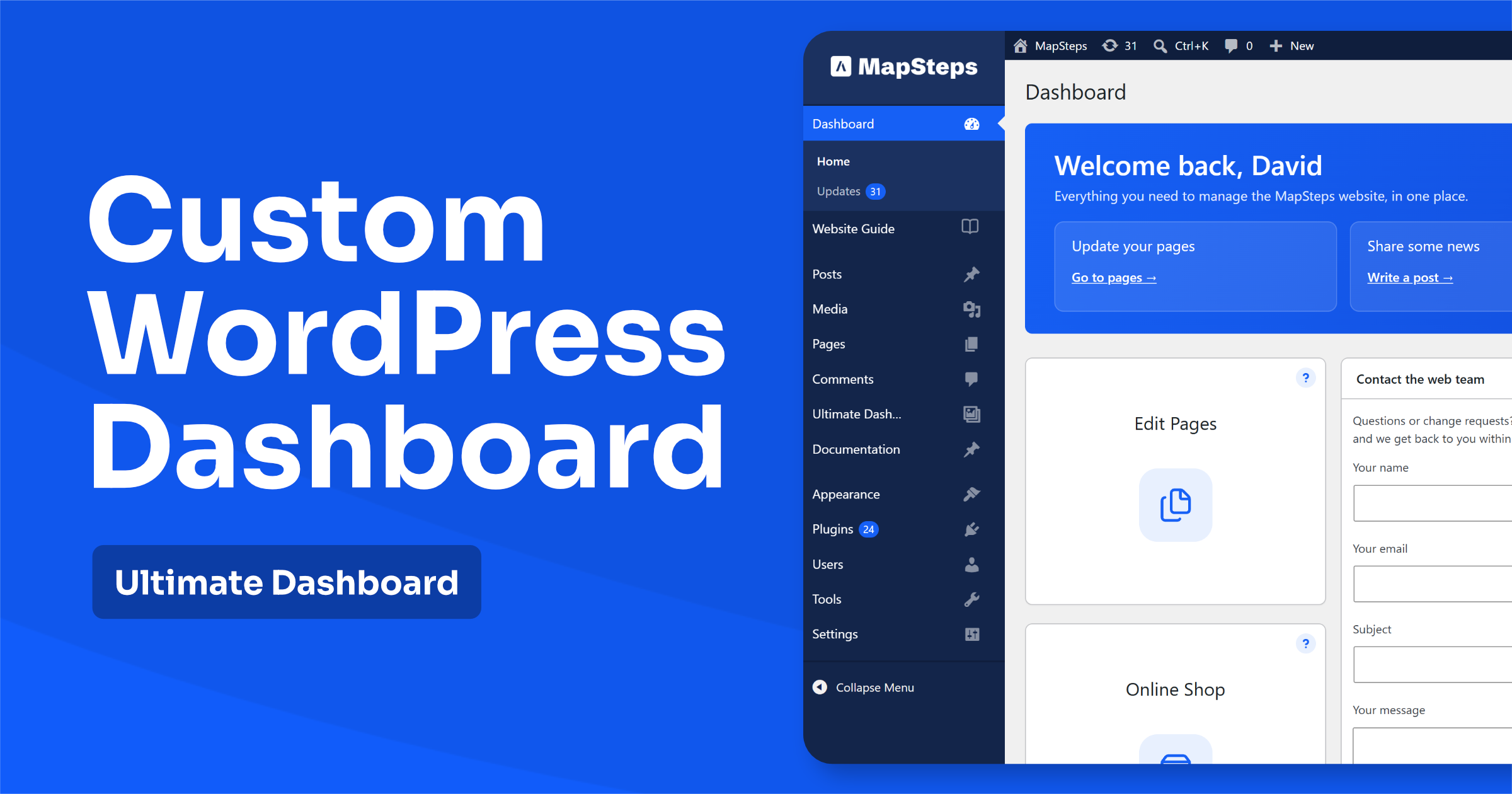
The WordPress dashboard is the first screen you and your clients see after logging in. Out of the box, it’s full of things most people don’t need: WordPress news, plugin notices, quick drafts and a widget from almost every plugin you’ve installed.
A custom WordPress admin dashboard replaces that clutter with what actually matters: a personal welcome message, links to the right places, your support details and your own brand colors.
In this guide, I’ll show you step by step how to customize every part of the WordPress admin area with the Ultimate Dashboard plugin: the dashboard widgets, the welcome panel, the admin menu, the admin bar and the overall look. No code required. (New to WordPress? Start with our beginner’s guide to the WordPress admin area.)
What You Can Customize (Free vs. PRO)
Ultimate Dashboard comes as a free plugin on WordPress.org, plus a PRO add-on for more advanced customizations. Here’s what each version covers:
| Feature | Free | PRO |
|---|---|---|
| Remove default WordPress dashboard widgets | ✓ | ✓ |
| Remove widgets added by other plugins | – | ✓ |
| Icon, text & HTML dashboard widgets | ✓ | ✓ |
| Custom admin pages | ✓ | ✓ |
| Login page customizer | ✓ | ✓ |
| Video & contact form widgets | – | ✓ |
| Custom welcome panel | – | ✓ |
| Page builder dashboard | – | ✓ |
| Admin menu editor | – | ✓ |
| Admin bar editor | – | ✓ |
| Admin colors, logo & layout | – | ✓ |
To follow along, install the free Ultimate Dashboard plugin from Plugins > Add New. For the PRO steps, you’ll also need Ultimate Dashboard PRO installed and activated.
Step 1: Remove the Dashboard Widgets You Don’t Need
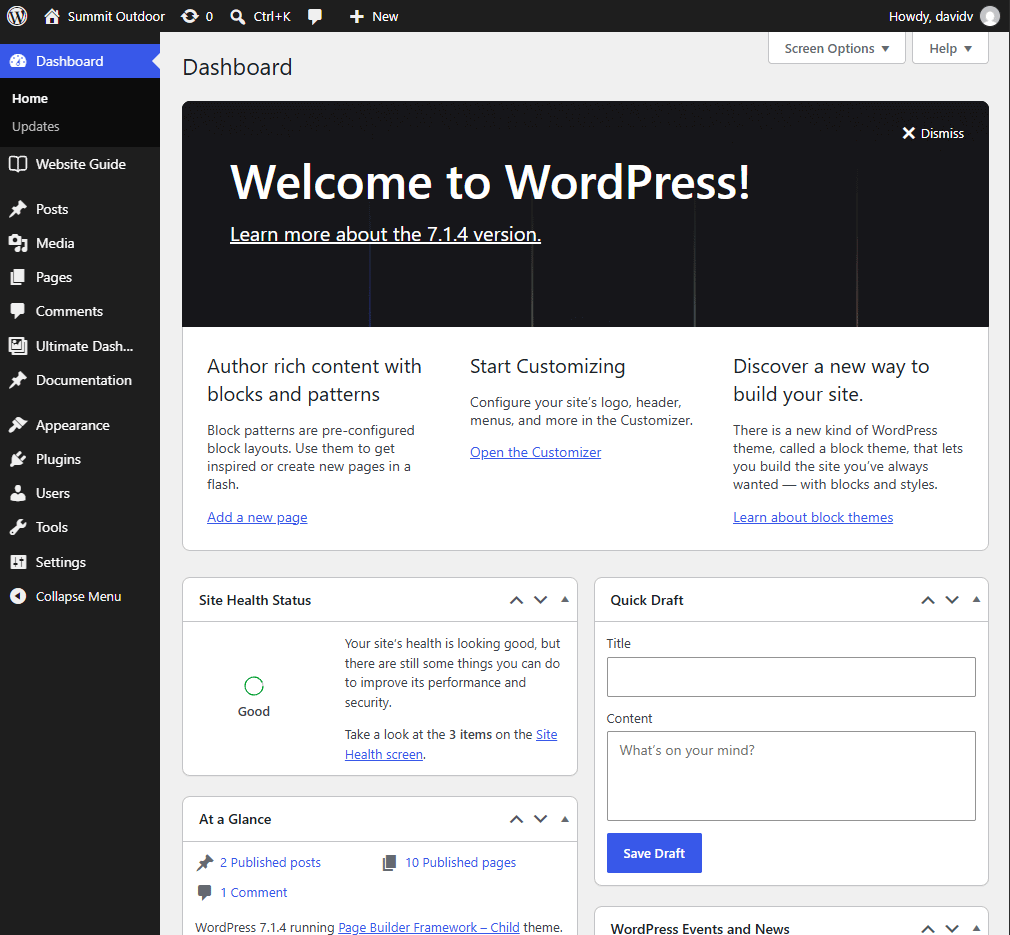
The default dashboard comes with a handful of widgets, and most plugins add one of their own. On my test site with a few plugins like Elementor installed, this is what the dashboard looks like by default:
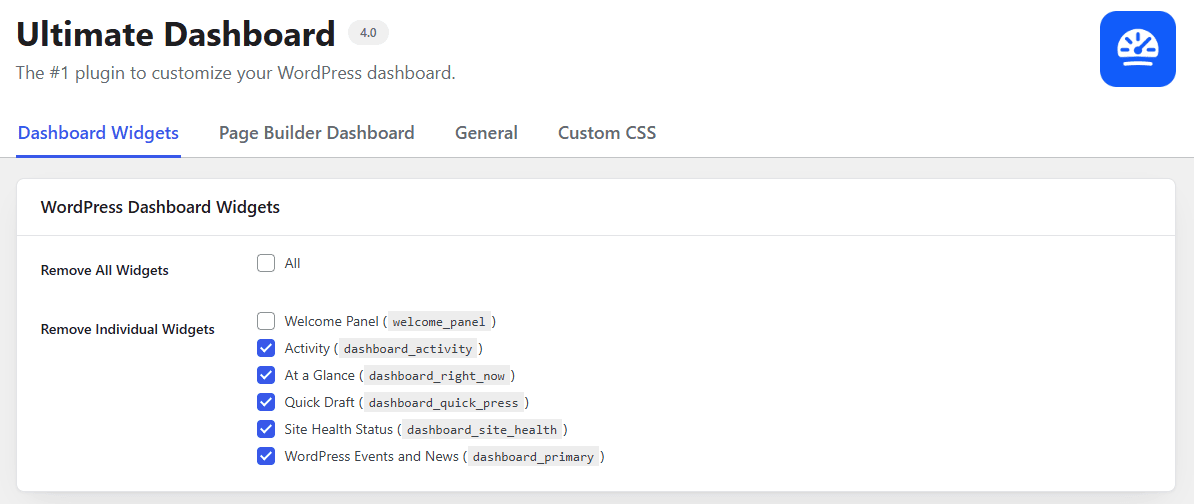
To clean it up, go to Ultimate Dash… > Settings > Dashboard Widgets and tick the WordPress widgets you want to remove, or remove them all at once (more on that in how to remove WordPress dashboard widgets). With PRO, you can also remove the widgets that other plugins add, in the 3rd Party Widgets section. When you’re done, click Save at the bottom.
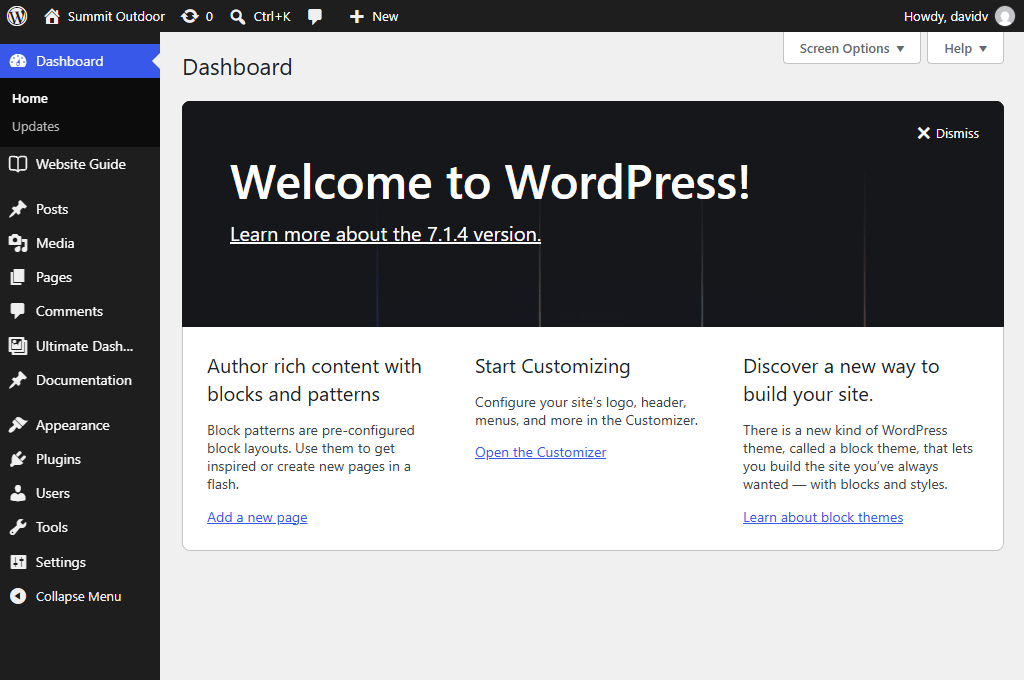
Here’s the result: a much calmer dashboard, ready for your own widgets.
Step 2: Add Your Own Dashboard Widgets
Now that the clutter is gone, let’s add widgets that are actually useful. Go to Ultimate Dash… > Add New and pick a widget type:
- Icon widget: a large icon that links anywhere, great for shortcuts like “Add a blog post” or “View orders”.
- Text widget: instructions, notes or a welcome message.
- HTML widget: anything you can write in HTML.
- Video widget (PRO): embed a tutorial video for your clients.
- Contact form widget (PRO): let users reach you right from the dashboard.
For this example, I’ll set up a contact form widget so clients can send support requests without leaving WordPress:
- Select Contact Form as the widget type.
- Add a short text description that shows above the form.
- Customize the input fields and the success message, if needed.
- Optionally, enable an autoresponder email and add the autoresponder text.
- Set the email address that receives the submissions.
- Choose the position (first or second column) and priority (order within the column). You can always drag the widget around on the dashboard later.
- Use User Role Access or User Access to show the widget only to specific roles or users.
- Enable logging to keep a copy of every message, in case an email doesn’t arrive.
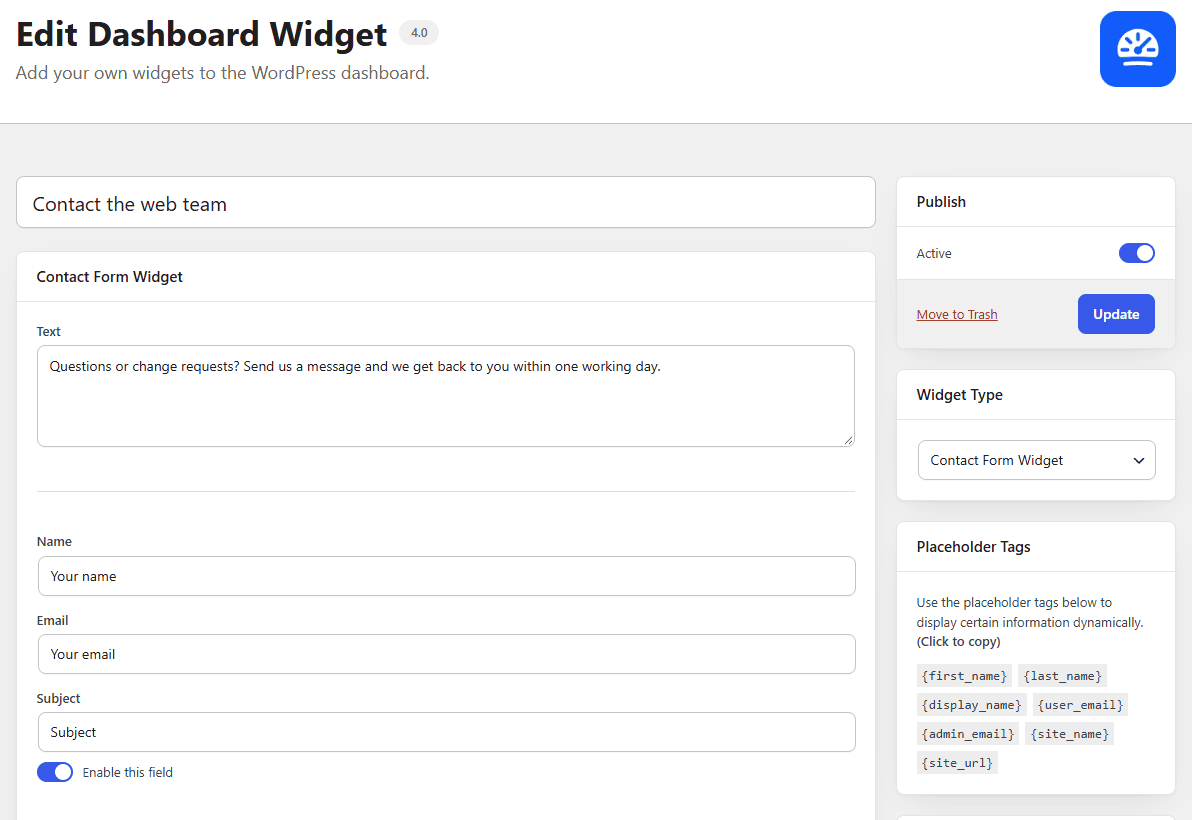
Click Publish, and the widget shows up on the dashboard. Here’s what mine looks like after adding a couple of custom widgets:
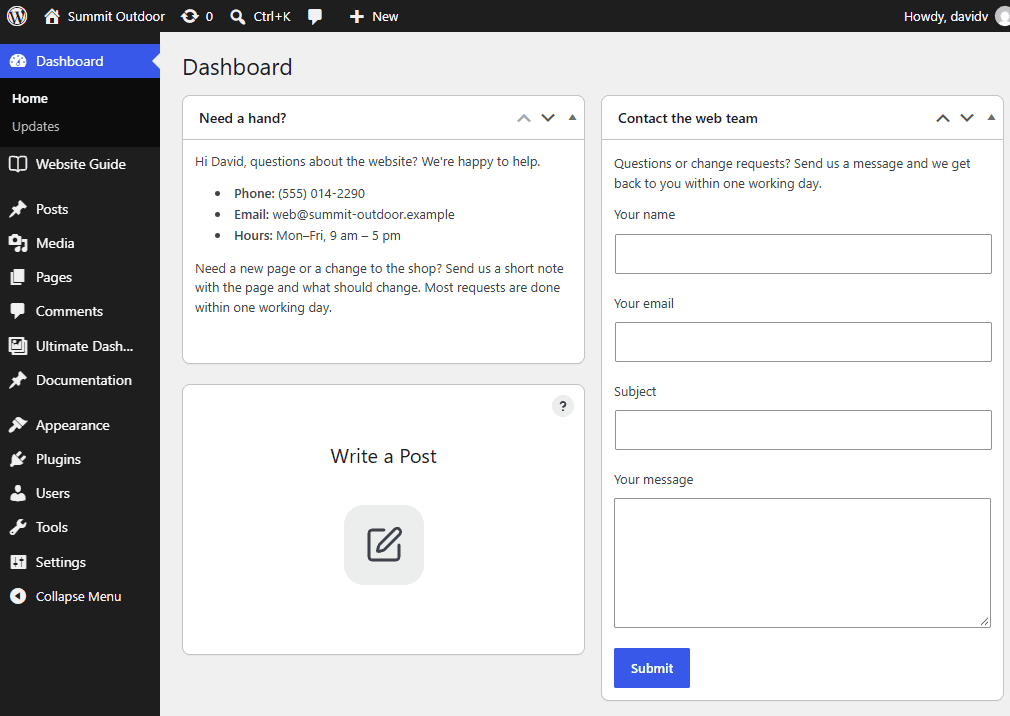
Repeat this for as many widgets as you like.
Step 3: Customize the Welcome Panel (PRO)
The welcome panel is the large box at the top of the dashboard. By default, it shows generic WordPress tips. With Ultimate Dashboard PRO, you can replace it with your own content.
Go to Ultimate Dash… > Settings and scroll down to the Welcome Panel section. Edit the content in the visual editor, or switch to the Text tab if you prefer writing HTML.
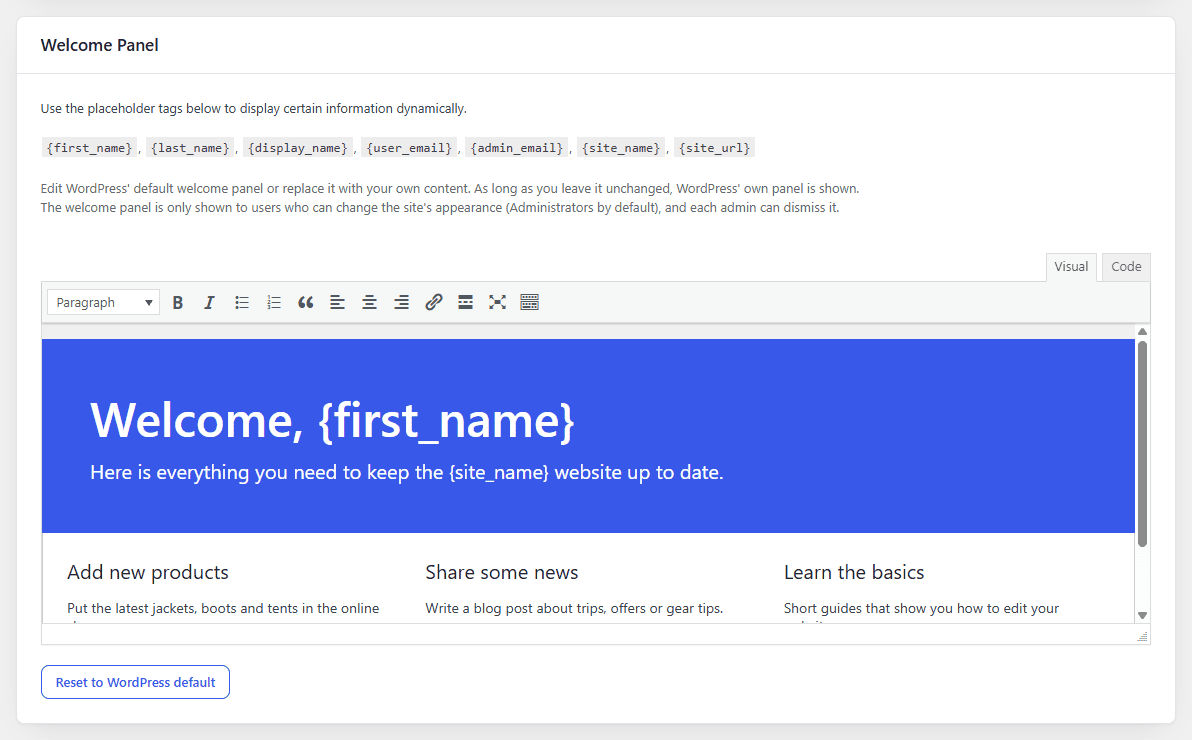
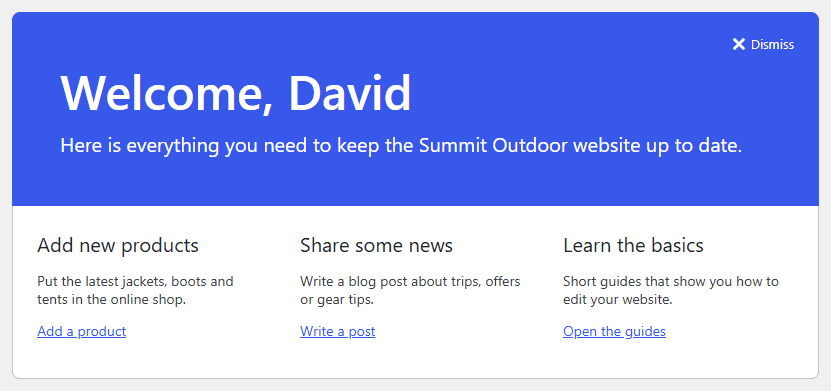
You can also use placeholder tags to pull in dynamic data, like {first_name}, {display_name}, {site_name} or {site_url}. That way, every user is greeted by name.
Click Save to make your changes live. Here’s my custom welcome panel:
Step 4: Build the Entire Dashboard With a Page Builder (PRO)
If you want full design control, you can replace the whole dashboard with a page you designed yourself. Ultimate Dashboard PRO supports Elementor, Beaver Builder, Divi, Brizy, Bricks, Breakdance and Oxygen, as well as the WordPress block editor.
Design your dashboard as a template in your page builder, then go to Ultimate Dash… > Settings > Page Builder Dashboard and select it. To use the block editor instead, create a Block Editor Template there and select that.
Learn more about the Divi, Bricks and Breakdance integrations.
Step 5: Edit the Admin Menu (PRO)
The admin menu is the menu on the left side of the screen. Which items show up depends on the user’s role, but with Ultimate Dashboard PRO you can rename, reorder, hide and add menu items, for every user role separately. Here’s more on hiding admin menu items in WordPress.
Go to Ultimate Dash… > Admin Menu Editor.
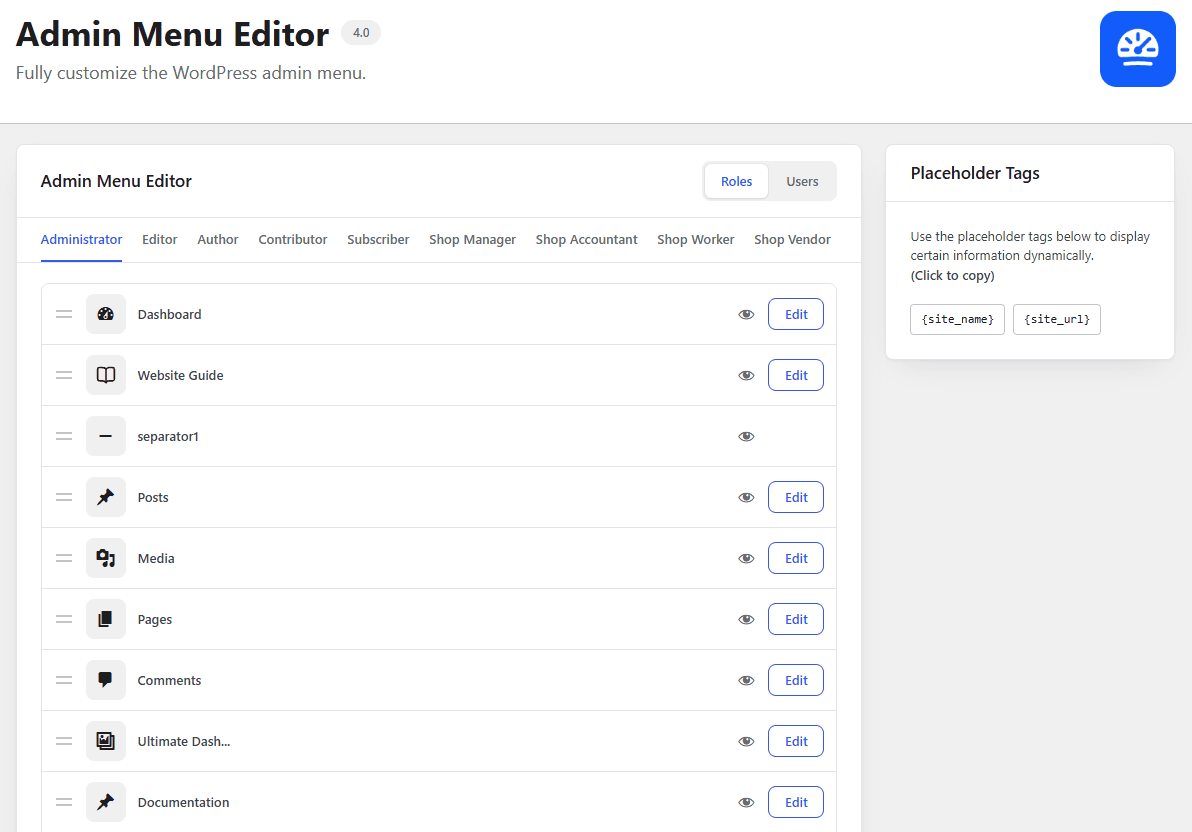
For example, let’s add a “Contact Agency” support link to the bottom of the menu, for editors only. Click the Editor tab and scroll to the bottom.
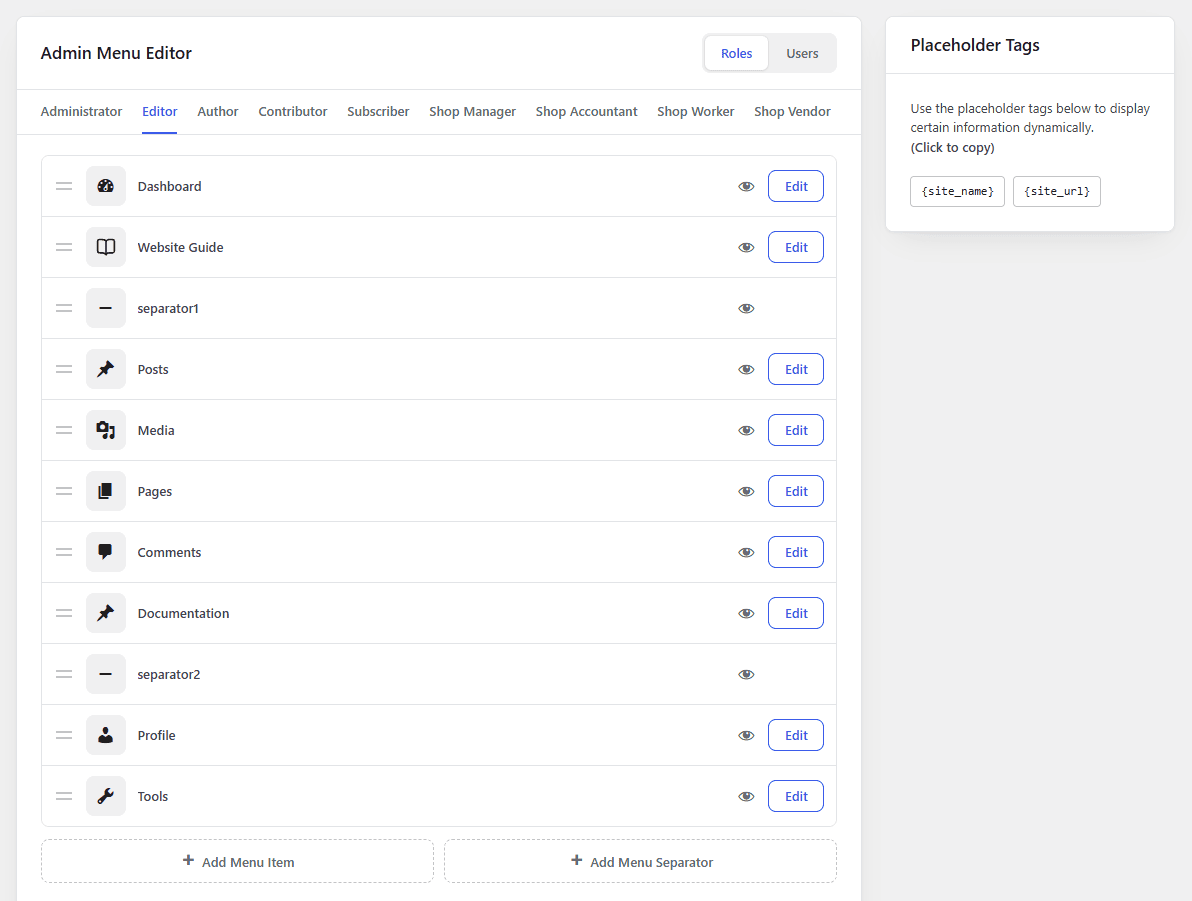
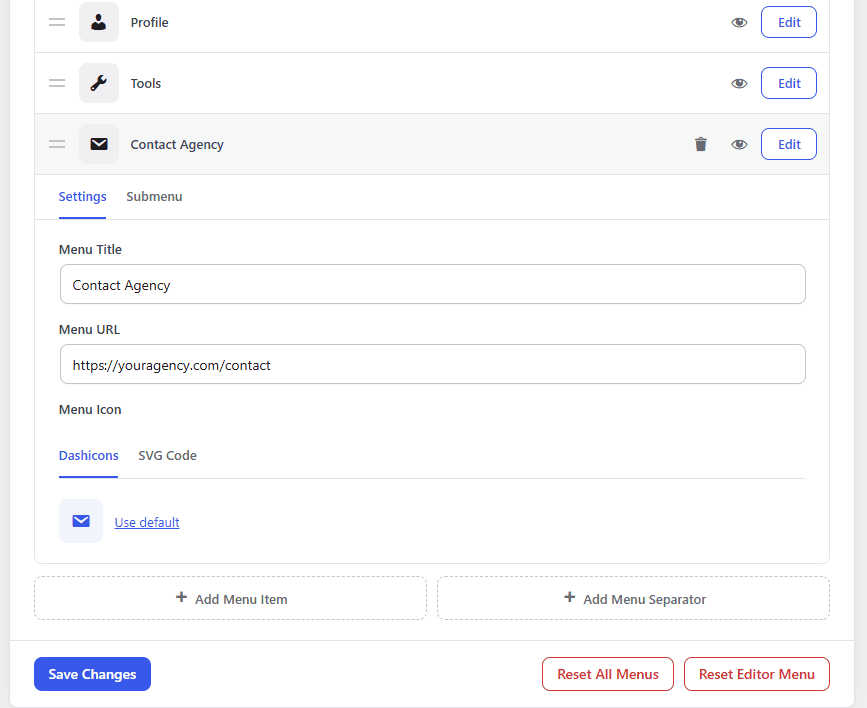
Click Add Menu Item, then give the new item a name, a URL and an icon.
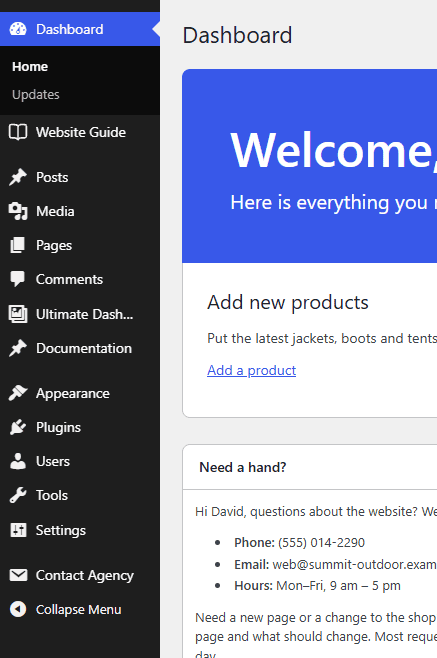
Click Save Changes, and the new item shows up in the menu for every editor:
You can also drag sub-menu items from one top-level menu to another.
Step 6: Edit the Admin Bar (PRO)
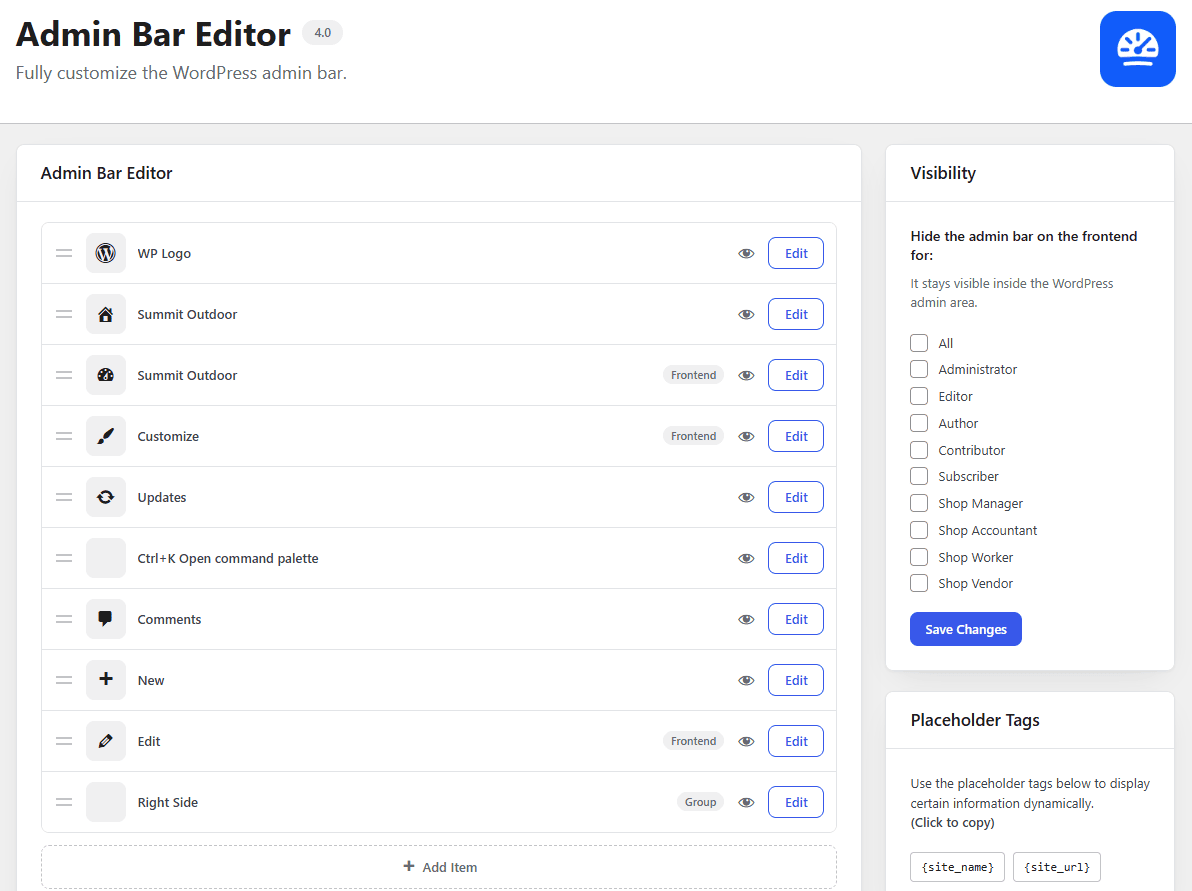
The admin bar is the dark bar at the top of the screen. It works just like the admin menu: go to Ultimate Dash… > Admin Bar Editor to hide, rename or re-link items, add new ones, and do the same for sub-menu items.
Step 7: Brand the Admin Area (PRO)
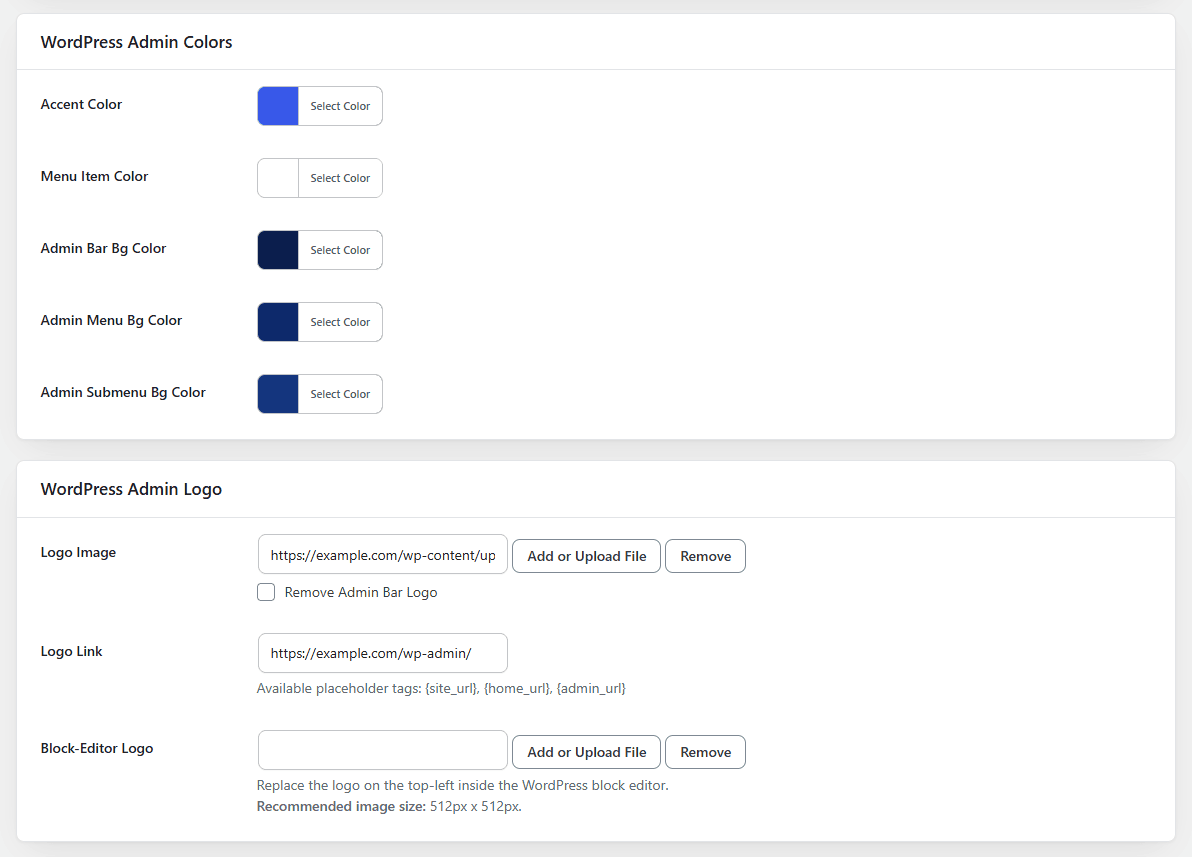
The last step is making the admin area look like your brand instead of WordPress. Go to Ultimate Dash… > White Label and enable WordPress Admin Branding. Then:
- Pick a layout: the default WordPress look or a more modern one.
- Set your own admin colors: accent color, menu item color, admin bar background and admin menu background.
- Replace the WordPress logo in the admin bar with your own logo.
Comparing white label plugins? See how Ultimate Dashboard compares to White Label CMS.
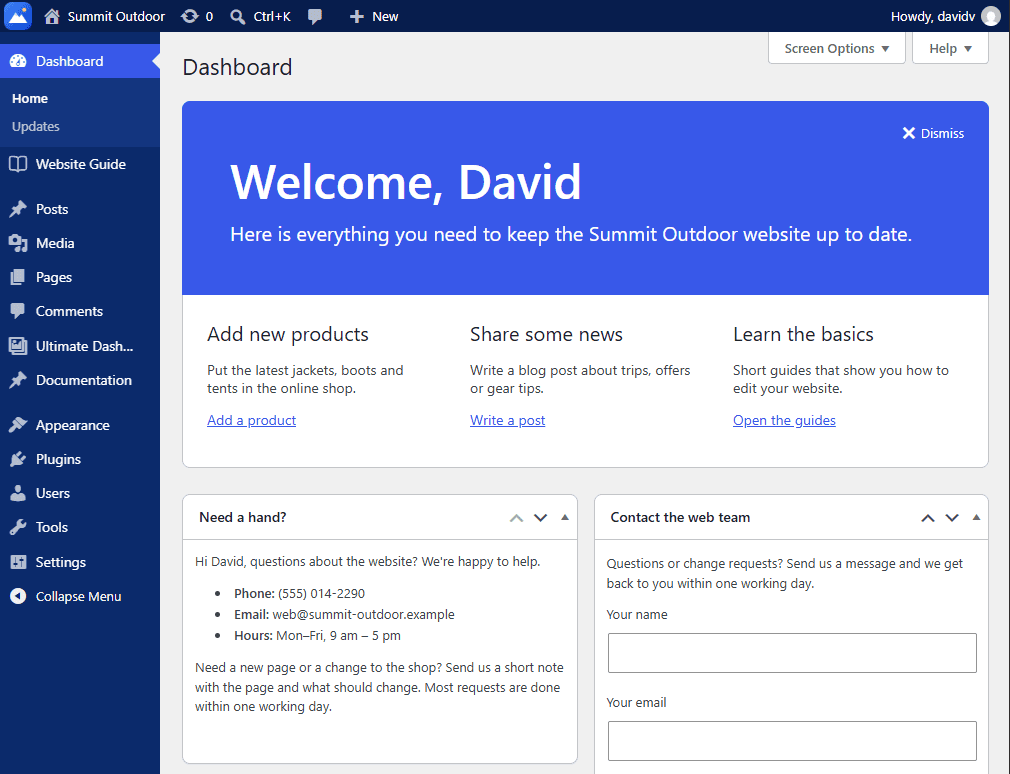
Click Save Changes at the bottom of the page. Here’s the finished dashboard after a few simple changes:
Take It Further
The dashboard is only one part of the admin experience. With Ultimate Dashboard, you can also:
- Create a custom WordPress login page that matches your brand.
- Change the login URL and redirect users after login.
- Create custom admin pages with documentation, tutorials or links for your clients.
Frequently Asked Questions
Can I customize the WordPress dashboard without a plugin?
Yes, with custom code in your theme’s functions.php file or a custom plugin. But that means writing and maintaining PHP for every change. A plugin like Ultimate Dashboard does the same with a few clicks, and your changes survive theme switches.
Is Ultimate Dashboard free?
Yes. The free version lets you remove dashboard widgets, add your own widgets, create admin pages and customize the login page. Ultimate Dashboard PRO adds the welcome panel, page builder dashboard, admin menu and admin bar editors, admin branding and more.
Can different user roles see a different dashboard?
Yes. With PRO, you can show each widget only to specific user roles or users, and edit the admin menu separately for each role.
Will these changes affect my website’s front end?
No. Visitors never see the admin area. The only part that also shows on the front end is the admin bar, and only for logged-in users.
How do I go back to the default WordPress dashboard?
Turn off the module you don’t want under Ultimate Dash… > Modules, or deactivate the plugin. Your settings are kept, so you can switch things back on anytime.
Create Your Custom WordPress Dashboard Today
A custom dashboard makes WordPress feel like your own product instead of a generic tool, and it saves your clients from getting lost. Start with the free Ultimate Dashboard plugin, and upgrade to Ultimate Dashboard PRO when you want the full white-label experience.
Questions or ideas for the next update? Let me know in the comments below.
Leave a Reply